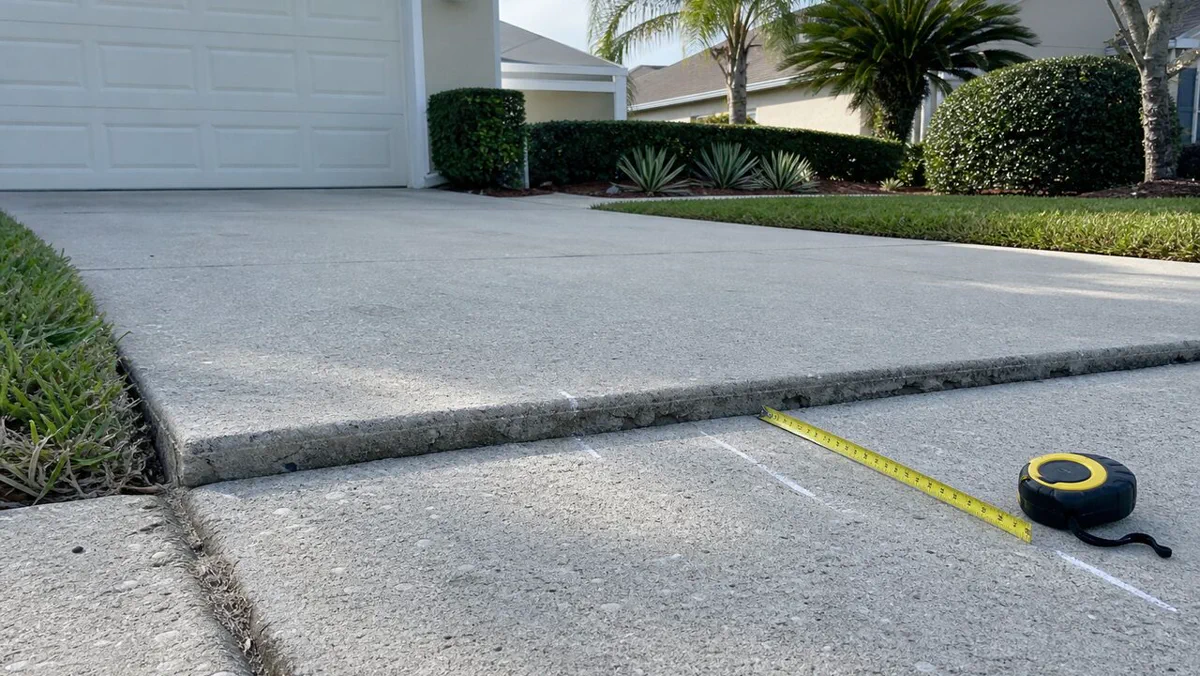
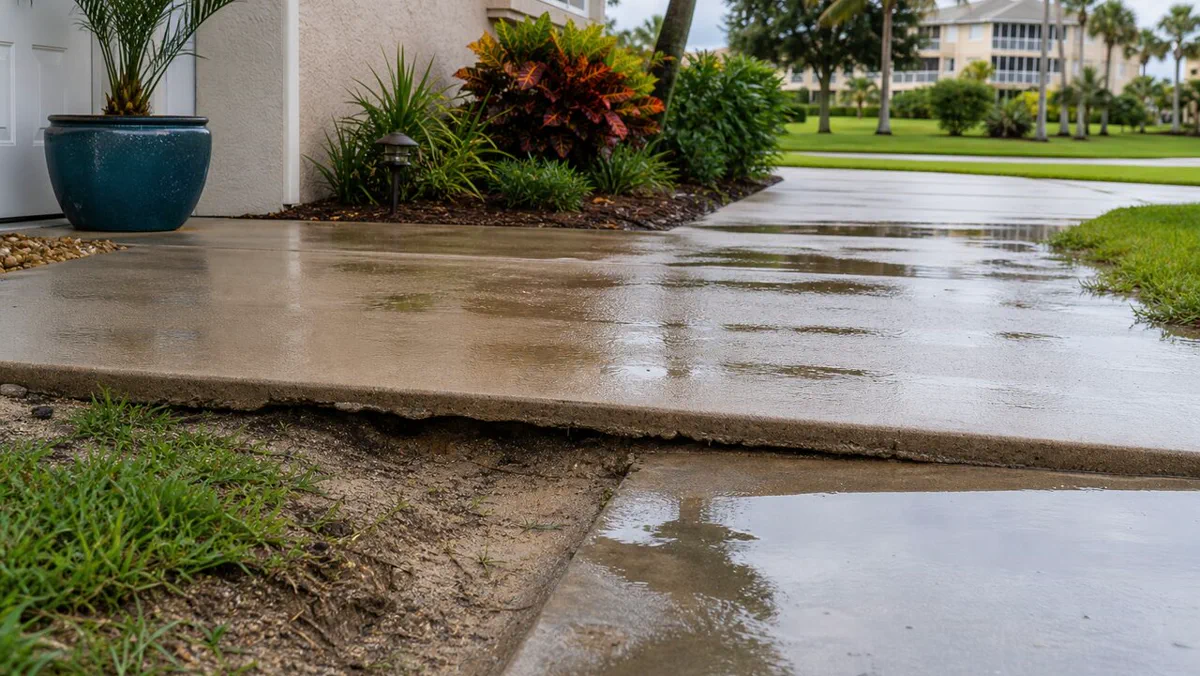
Settled driveway panel
Driveway panels, walkway trip edges, patios, and pool decks can often be reviewed by starting with what moved and how it affects daily use.
If a driveway panel, walkway, patio, or pool deck has settled or lifted, you can call or use the form without knowing the exact cause. A concrete lifting professional can talk through what you are seeing, explain whether lifting may fit, and identify when replacement, drainage work, or another repair path should be considered.
Common slab problems
Driveway panels, walkway trip edges, patios, and pool decks can often be reviewed by starting with what moved and how it affects daily use.
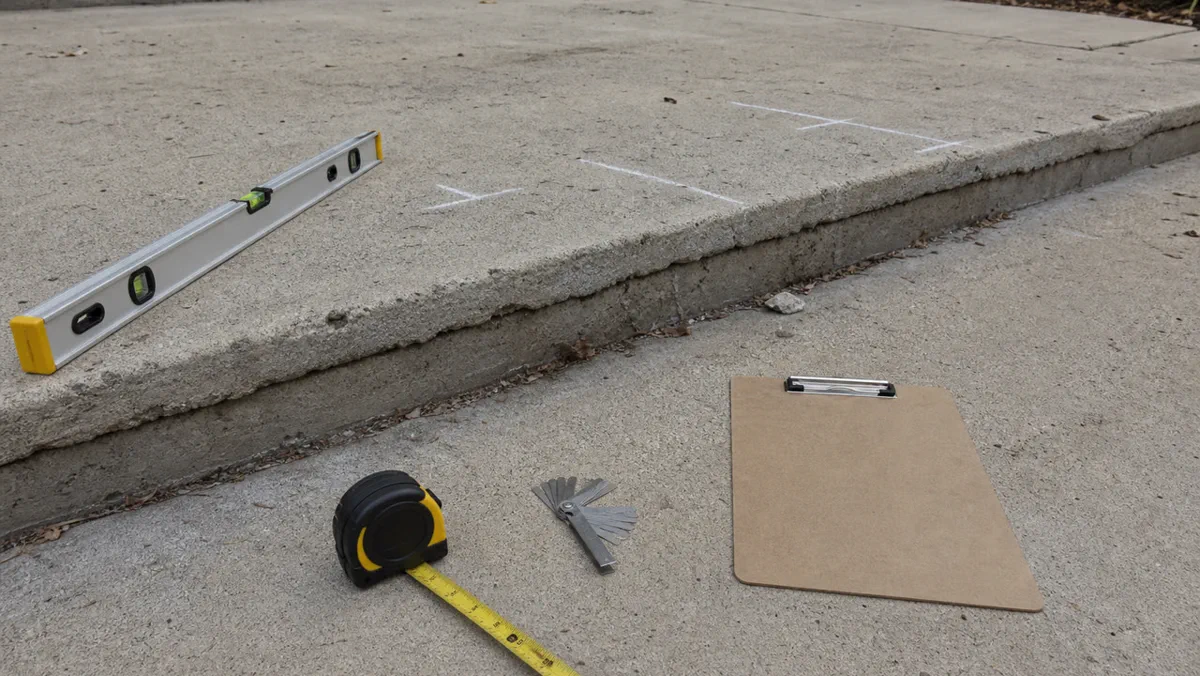
The first call should be simple: explain what you are seeing, then let the professional ask follow-up questions if they are needed.
Driveway, walk, patio, pool deck, or porch is enough to begin.
A raised edge, low corner, crack, gap, or water collecting nearby can be discussed in simple terms.
Tight gates, pool screens, pets, or side-yard limits can be covered during the follow-up call if they matter.
If lifting is not a good fit, the follow-up can point toward replacement, drainage work, or another specialist without overpromising.
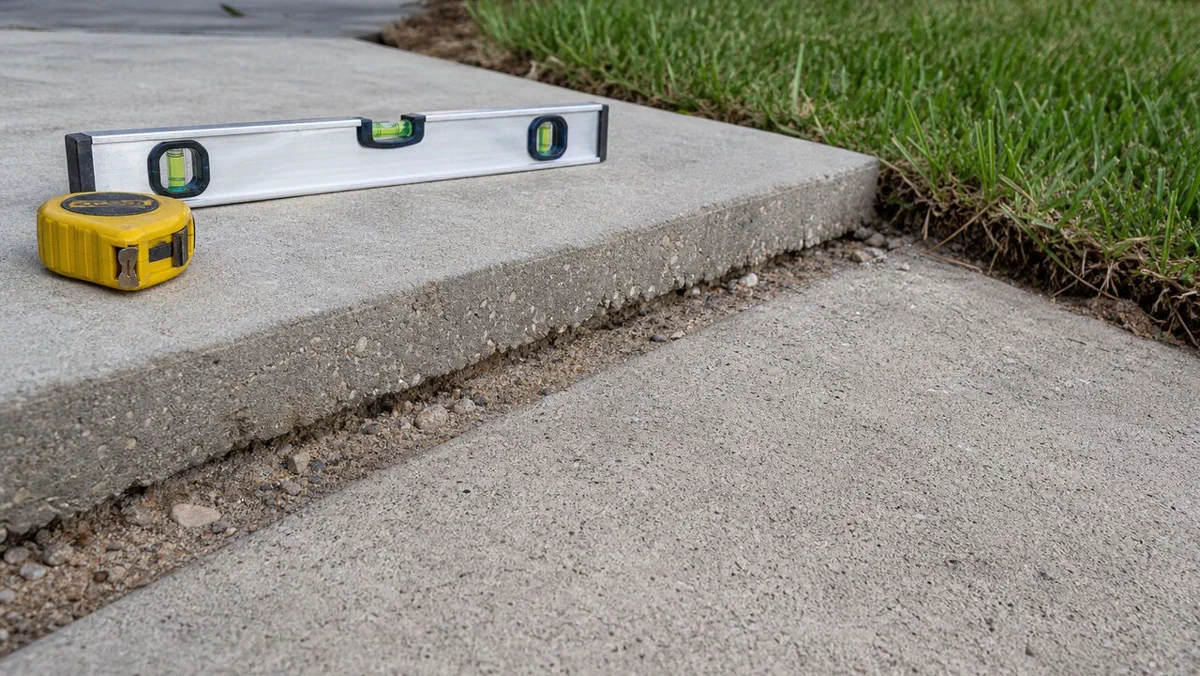
Concrete lifting cost and scope depend on the slab location, how far it moved, whether the concrete is intact, access to the work area, and whether water or soil movement is still causing problems. A short call can help sort whether lifting is worth discussing or whether replacement or another repair path is more realistic.
You do not need measurements or a diagnosis to ask for help. A plain description such as “the walkway edge is raised” or “the patio corner drops after rain” is enough to begin.
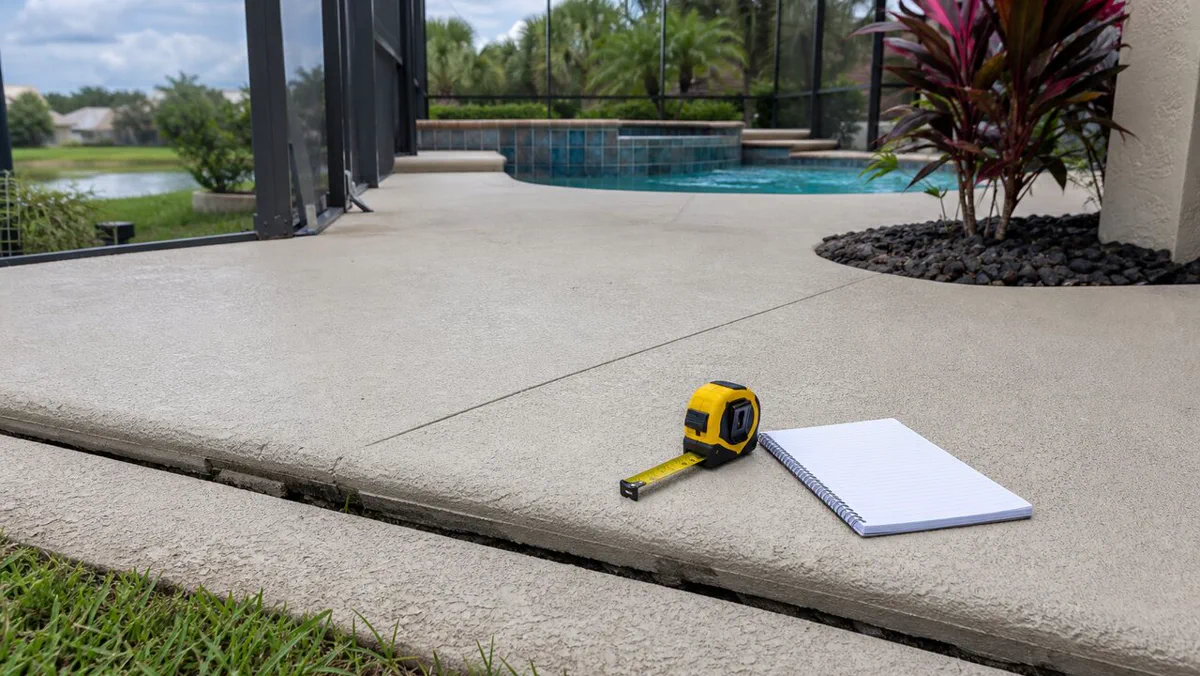
For a Daytona Beach property, common cost factors include slab size, cracks, access, nearby drains, screen enclosures, pool-deck constraints, and whether the soil is still washing out.
The goal of the first response is to narrow the next step while keeping your request simple.
Low panels near the garage, apron, or tire path can collect water and create a rough approach. The callback can cover whether the slab is cracked through, whether water ponds, and whether the garage edge is affected.
Walkways and entry paths can be described in plain language. The discussion can cover edge height, roots, drainage, and whether the sidewalk is private or tied to a public area.
Pool deck lifting needs extra care around drains, coping, screen posts, deck joints, and nearby utilities. A professional should avoid promises from one limited observation when the slab connects to pool structure.
Patios and porch slabs often involve gates, screens, furniture, pets, and tight side yards. Access can change the practicality of the work.
Homeowners often compare polyurethane foam lifting with older mudjacking language. The callback can explain material, access holes, weight, cleanup, and limits without hype.
Large cracks, active erosion, undermined edges, foundation concerns, or drainage failures may point toward replacement or another specialist instead of lifting.
After you call or use the form, the next step should be a straightforward review of the slab type, the amount of movement, and whether the concrete appears intact enough for lifting to make sense.
Expect a few follow-up questions about the slab location, edge height, crack pattern, water source, nearby joints, and whether the problem changes after heavy rain. You can answer in plain language.
Concrete lifting can address many settled flatwork problems, but it should not be sold as structural engineering, drainage redesign, pool-shell repair, or tree-root correction. If those clues appear, the next step may be replacement, a different specialist, or a narrower lifting scope.
Volusia County slab problems often involve sandy fill, repeated afternoon rain, irrigation overspray, roof runoff without clean discharge, and pool-deck access constraints. These issues can be discussed during the callback so the repair path considers why the slab moved in the first place.
Common homeowner questions
No. The panel usually needs enough intact concrete to lift cleanly. Multiple broken pieces, active erosion, root heave, thin concrete, or foundation-adjacent movement can change the right repair path.
Start with the slab area and what changed: a raised edge, low corner, gap, crack, or water problem. You can keep it simple; extra details can wait until a professional asks for them.
Sometimes lifting improves how a slab sheds water, but it does not solve every drainage source. Downspouts, irrigation heads, washout, and grading can recreate the void after a lift, so they may come up during the callback.
Replacement may be a better path when concrete is crumbling, broken into several loose pieces, moving because of active roots, or sitting over soil that is still washing out.
Mention the slab area and the visible problem first. If roof runoff, drains, irrigation, pool-deck features, or tight access are obvious, those can be discussed next.
Pool decks need extra care around coping, drains, screen posts, buried lines, and the pool structure. A pool-deck review should account for those conditions before anyone treats it like a standard patio slab.
If a driveway, walkway, patio, porch, or pool deck has dropped, lifted, cracked, or started holding water, you can reach out before you know the cause. Call or use the form, describe the slab in plain language, and let the follow-up questions narrow the practical next step.